PondTools designs a pond from a photo of the yard
Draw the pond over a photo, a drawing or a satellite view, or describe it in a chat. PondTools works out the gallons, picks the pump, skimmer and filter, prices every part, and turns the design into a photoreal image and an eight-second video for the client.
Describe it or draw it
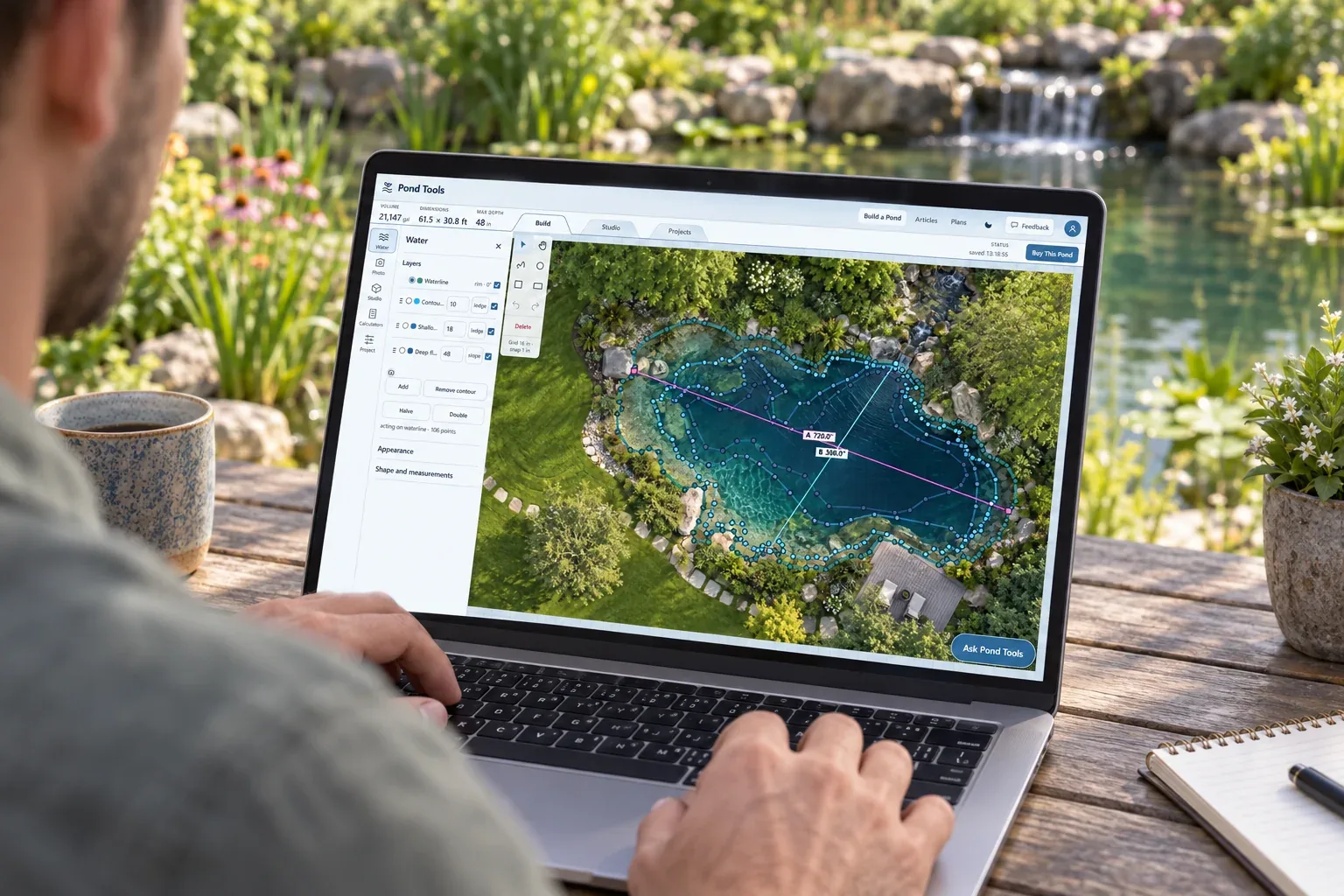
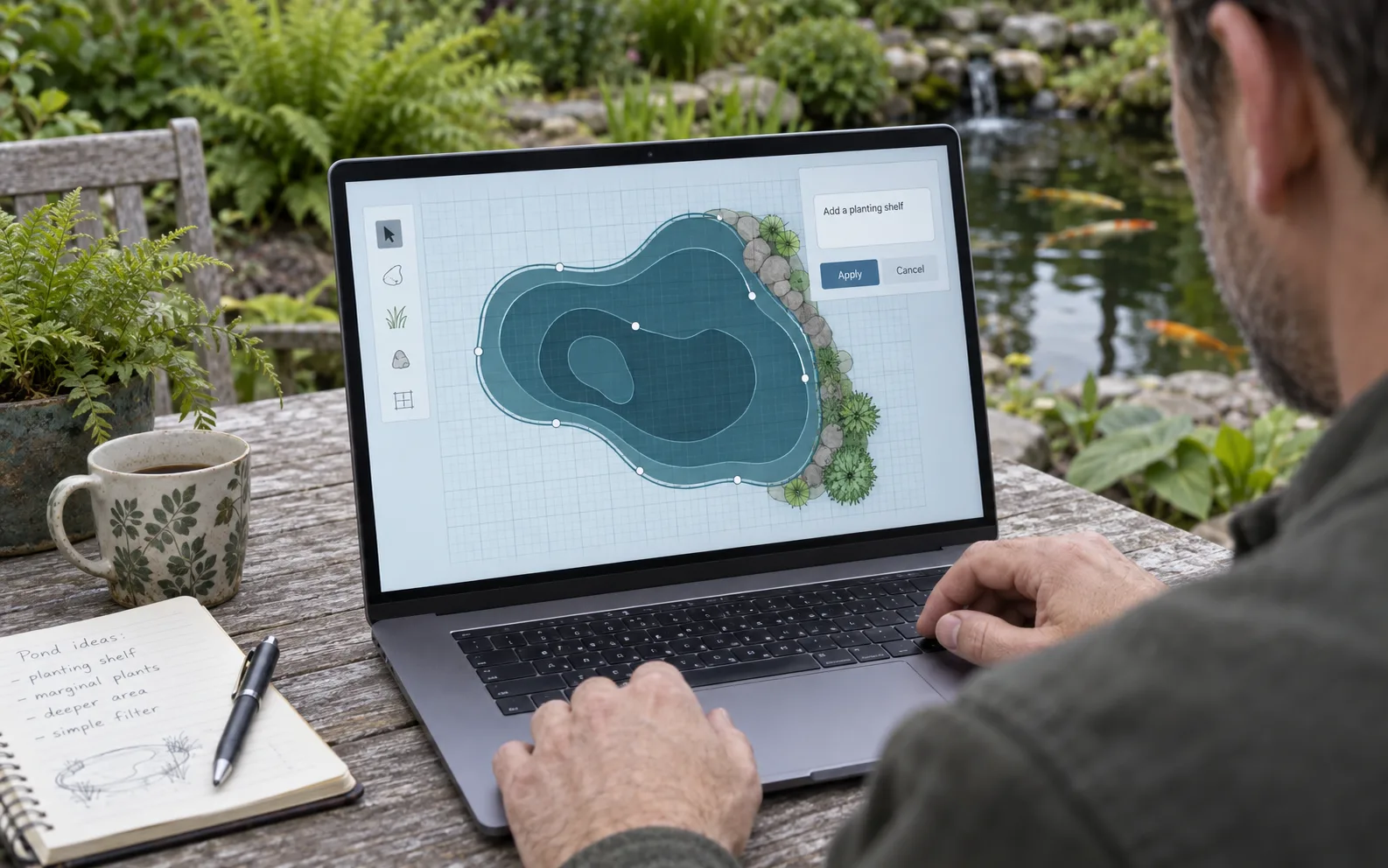
Type what you want, such as "a kidney-shaped pond with a waterfall in the back corner", and the AI proposes a shape. Or trace it yourself. Either way you set the depth of each shelf and can turn the pond around in 3D.
Gallons from the real shape
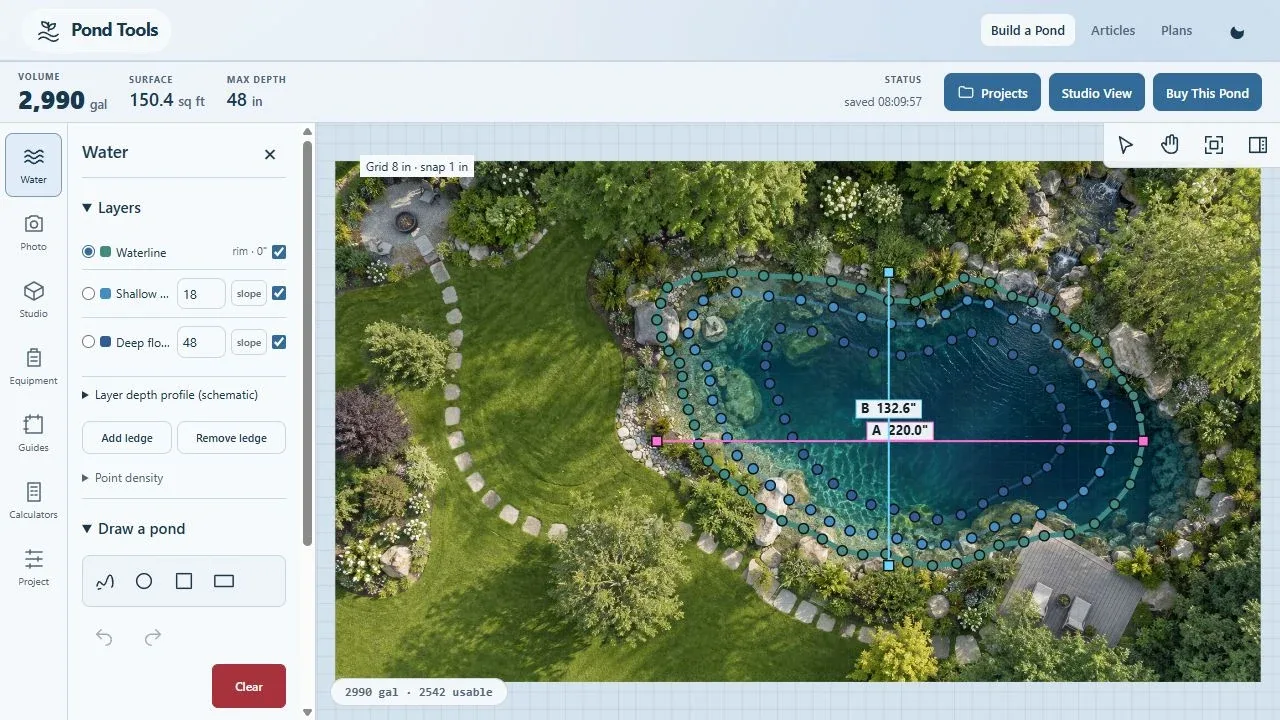
PondTools calculates the volume from the outline and the depth of every shelf, not from length times width times a guessed average. The pump is sized for the flow the pond needs at the head it will run against, and the skimmer and BioFalls are matched to that flow on Aquascape's own ratings.
The pond in their own yard
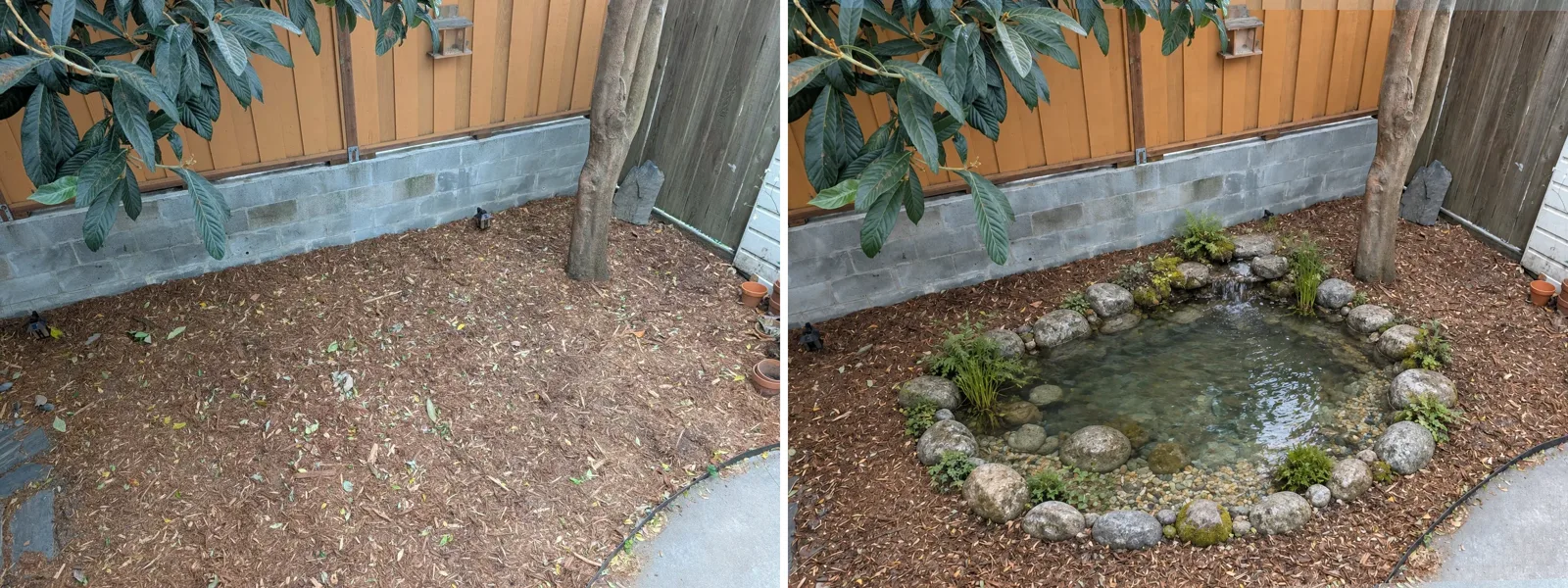
Take a photo on the visit and set the scale from one distance you know, like the width of a gate. Draw the pond where it will go and generate a photoreal image of it in that photo.
A parts list you can order from
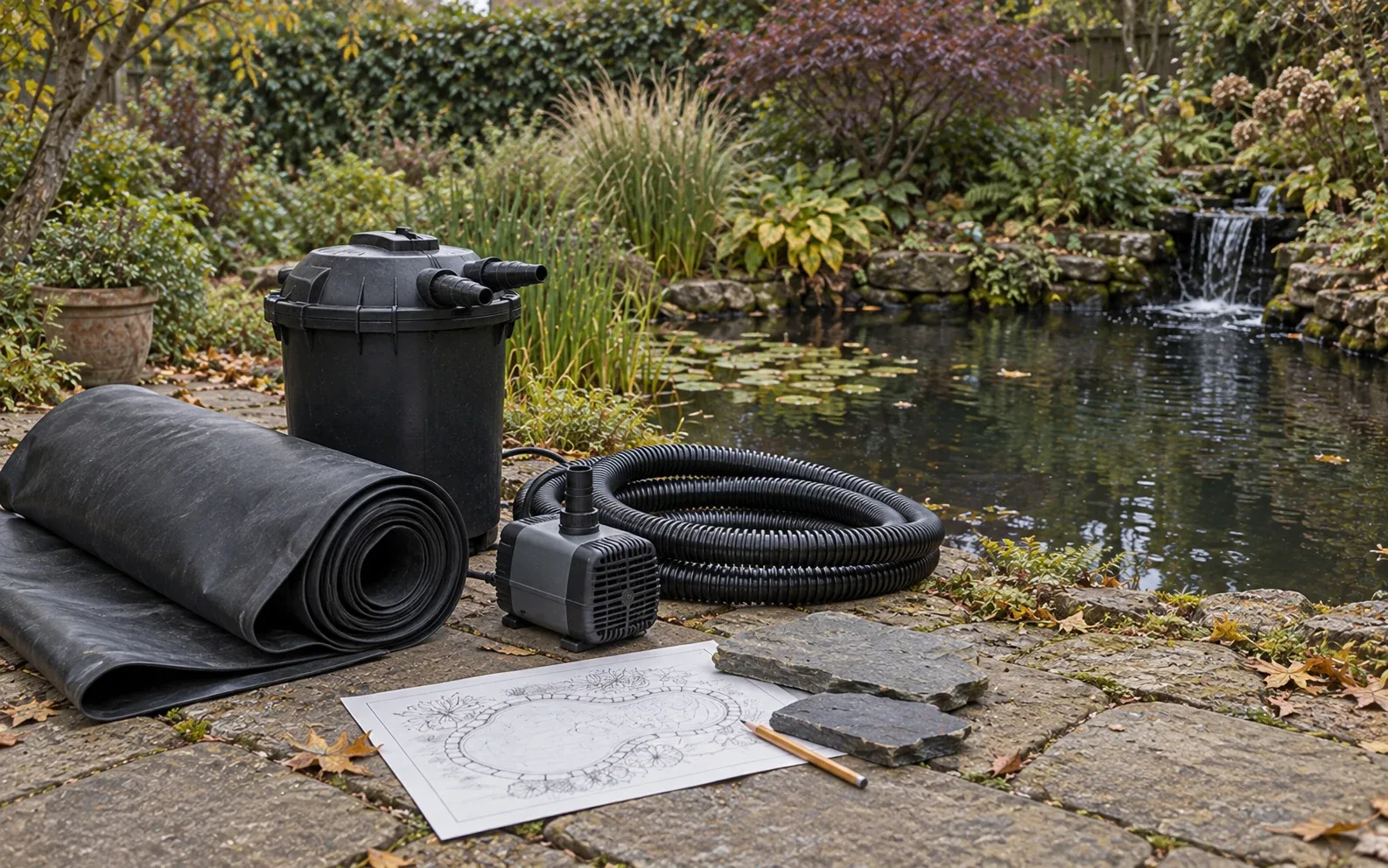
The drawing becomes a parts list with a price on every line. It includes the six things kits leave out, from dechlorinator to a fill valve, and the boulders and gravel by the ton.
Whole lakes from satellite and LiDAR
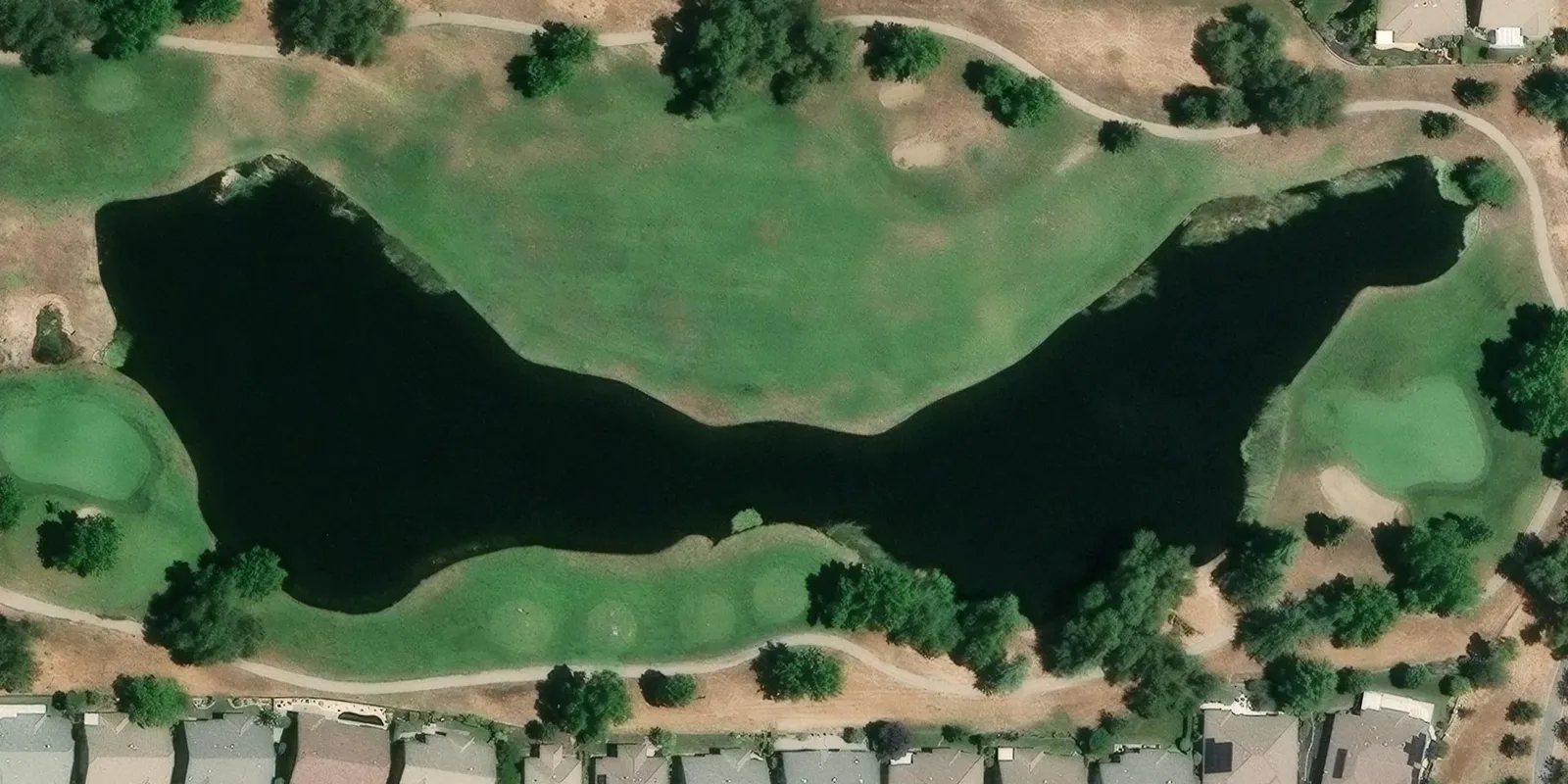
Trace water finds the shoreline on a satellite photo. The ground around it comes from the USGS 3DEP LiDAR survey, and the lake bed is estimated from the slope of that ground with a method the EPA published in 2011. You get depth contours, gallons and acre-feet without a boat.
Doses from the volume you measured
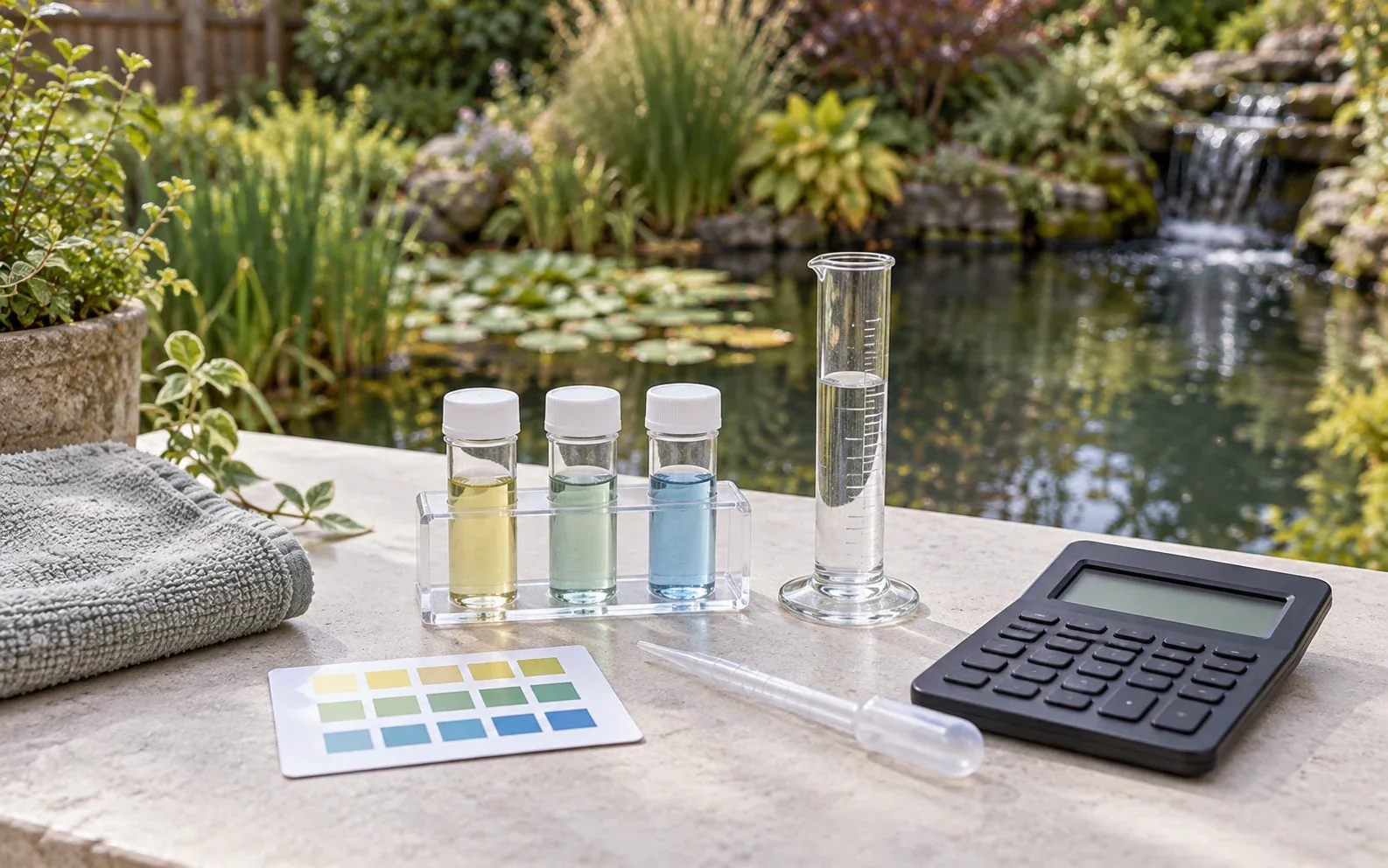
The salt, treatment, water-change and fish calculators all start from the pond's measured volume. Raising 1,717 gallons from no salt to 1 part per thousand takes 14.3 pounds.
What one PondTools design gives you
This pond was drawn in PondTools as a T. rex skull, mostly to show that the shape does not matter. Everything below came out of the drawing: the volume, the liner kit large enough to line it, and the rock for the edges and the waterfall. The video was generated from the same design.
- 1,940
- gallons
- 22'-6" × 20'-6"
- outside size
- 24"
- deepest point
- 7.1 to 11.5
- tons of boulders
- 3.2 to 5.2
- tons of gravel
Who uses it
Pond contractors use PondTools to quote on the first visit, with a picture of the finished pond and a parts list to order from. Homeowners use it to plan their own pond and buy the right amount of liner and rock. People who manage lakes use the satellite and LiDAR mapping to get a volume for treatment.
Questions about PondTools
- Do I need to measure first?
- No. Trace over a yard photo after setting the scale from one known distance, or over a satellite view, and adjust the measurements later.
- Which equipment does it pick?
- Aquascape skimmers, BioFalls filters, pumps and liner, sized on Aquascape's published ratings. Dealers can show their own prices.
- How accurate is the lake mapping?
- The shoreline and the surrounding ground are measured. The lake bed is an estimate from the slope of the land around it, so treat the depth as a planning figure and check it before dosing anything sensitive.
- Can I send the design to a client?
- Yes. Send a link to the design with its picture and parts list, or download them.
From the PondTools blog
- How many gallons is my pond?Length times width times depth is close for a box. Ponds with shelves are another matter.
- The six things a pond kit leaves outFoam sealant, dechlorinator, starter bacteria, netting, silicone and a fill valve come to about $166.
- How much salt does a pond need?About 8.34 pounds per thousand gallons for each part per thousand. The hard part is the gallons.
- Estimating a lake's volume without a boatPondTools traces the shoreline from satellite and estimates the bed from USGS LiDAR.